
Sulfated vs. Sulfate-Free Shampoo in Winter: What’s Best for Frizzy Hair?
Every winter it’s the same pattern — hair feels fine through summer, then the moment the air turns dry and the heater kicks on, frizz shows up no matter what you do. A big part of that comes down to one ingredient most people never actually think about: sulfates.
Why Winter Is Rougher on Hair Than It Seems
It’s not really the cold itself. It’s several things stacking at once — drier outdoor air, dry indoor heating, hotter showers than summer habits, and for a lot of people, more frequent washing to deal with hat-hair or static. Each pulls a bit more moisture out of hair, and together it adds up fast.
Add in habits that creep in during winter without anyone noticing — rushed, rougher towel drying, skipping conditioner, wool hats rubbing against already-dry strands — and frizz stops being occasional and starts feeling constant.
What Sulfates Actually Do
Sulfates create the thick, satisfying lather in most shampoos. They’re strong surfactants — very effective at breaking down oil and product buildup on the scalp. Genuinely useful for an oily scalp or heavy styling-product use.
The catch: sulfates don’t distinguish between unwanted buildup and the natural oils scalp produces for protection. A strong sulfate shampoo strips both. Fine if hair recovers quickly, but in winter — when hair is already losing moisture faster than usual — that extra stripping can tip things from “clean” to “dry and frizzy” fast.
Where Sulfate-Free Shampoo Fits
A sulfate-free formula swaps those strong surfactants for gentler ones. The lather is noticeably lighter, which can feel odd at first if a foamy wash is the norm. Lighter lather doesn’t mean less cleaning — it means less stripping, which is exactly the point for dry, color-treated, curly, or frizz-prone hair.
If hair feels tight, rough, or straw-like right after a regular wash — especially now, in winter — that’s usually a sign the current shampoo is a bit too strong for what hair needs this season, even if it worked fine in warmer months.
Not a Permanent Either/Or Choice
It’s not that sulfate-free is universally “good” and sulfated is “bad” — it depends on scalp condition and what’s actually happening. Oily scalp with real product buildup? A sulfate-based wash still makes sense occasionally. Dry, frizzy, color-treated hair struggling through winter specifically? That’s where sulfate-free earns its place.
Many people land on a middle ground — sulfate-free as the daily shampoo, with an occasional stronger wash if buildup becomes noticeable. Adjusting based on how hair actually feels week to week works better than locking into one camp permanently.
Small Habits That Help More Than Expected
- Lukewarm water, not hot. Hot water feels good in winter but dries hair out faster than almost anything else in the routine.
- Wash only as often as the scalp actually needs. More washing in winter usually means more drying, not more “clean.”
- Press, don’t rub, with a towel. Wet hair is more fragile than it feels; rough towel-drying quietly contributes to frizz and breakage.
- Use conditioner even when it’s normally skipped in summer. Winter is exactly when it earns its place.
Two Sulfate-Free Options, Two Different Needs
“Frizzy hair” isn’t always the only thing going on, which is why keeping two sulfate-free options on hand covers more ground than committing to just one.
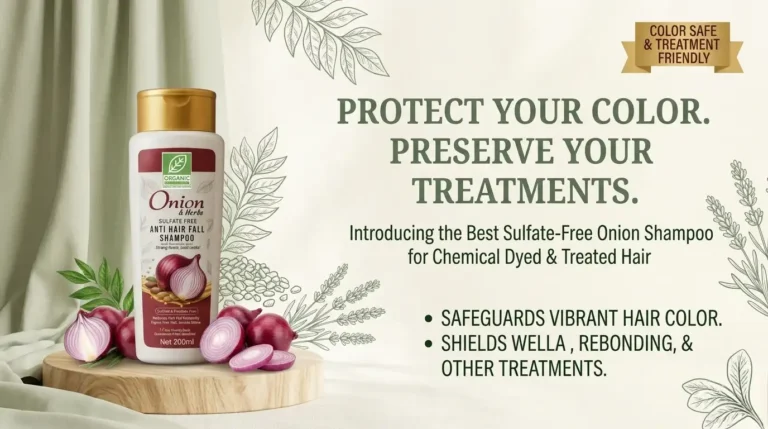
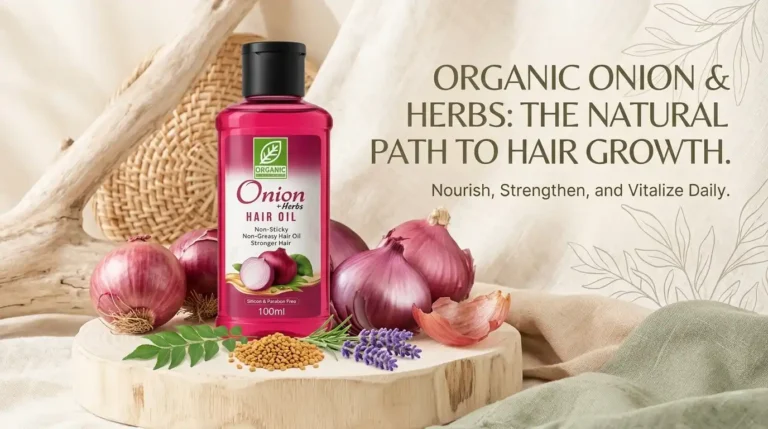
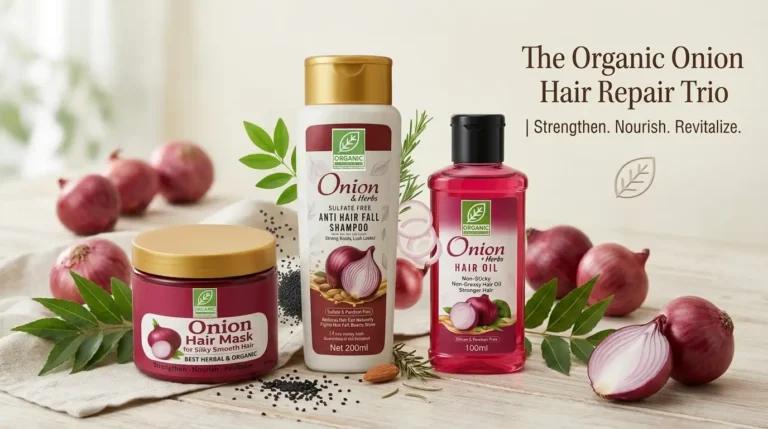
For hair fall alongside frizz, Organic Studio’s Onion & Herbs Sulfate Free Anti Hair Fall Shampoo is built for that — paraben-free, with onion long used in hair care specifically for strengthening roots.
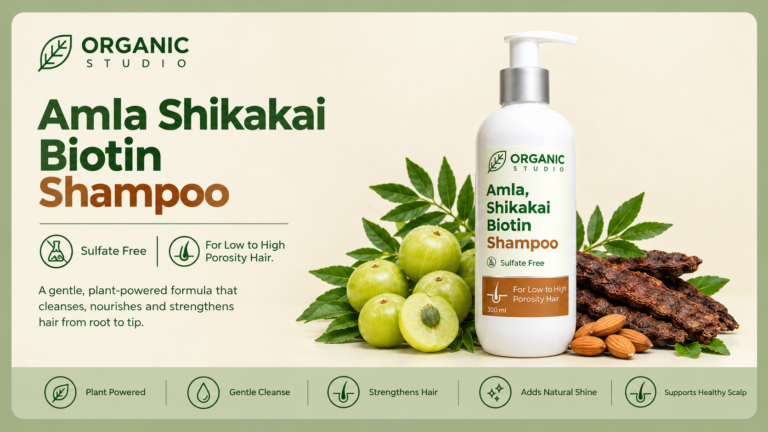
For weeks where dryness and frizz are the main concern rather than hair fall, Amla Shikakai Biotin Shampoo is the gentler, porosity-friendly option — same sulfate-free base, built around a different need.
Neither is a miracle fix. Winter hair care comes down mostly to consistency — the right gentle shampoo, lukewarm water, and not skipping conditioner, kept up through the whole season rather than only reached for once hair is already frizzy.